Pearl Types & Materials
Discover the rich variety of exquisite pearls and carefully selected materials used in the creations of LARUSCA Perlenschmuck®.
South Sea Shell Pearls
Perfect shapes and fascinating lustre.
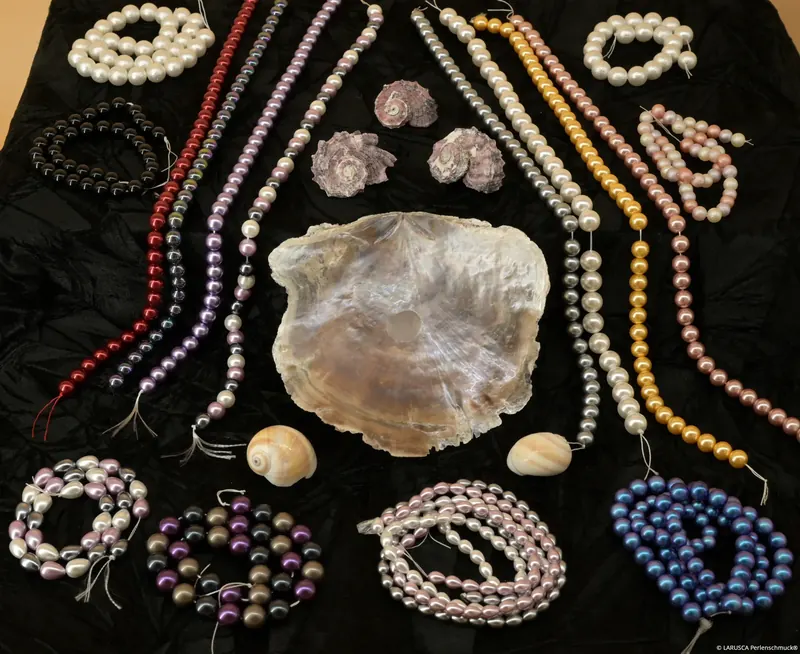
Shell pearls consist of a shell nucleus coated with multiple layers of nacre and composite. This elaborate process gives them their deep lustre, which seems to come from within. As they are produced under controlled conditions, classic South Sea shell pearls are distinguished by their particularly uniform shape and almost perfect roundness.
South Sea shell pearls are available in many colours and shapes and are admired for their harmonious, even lustre. Alongside the classic round varieties, shapes inspired by natural pearls are also produced today. Their organic appearance gives pieces of jewellery a distinctive presence and adds characterful accents.
It is important to distinguish them from glass pearls, which consist of a glass core with a thin synthetic coating. Although they may resemble shell pearls visually, they do not have the same multilayered structure or the characteristic depth created by nacre.
LARUSCA Perlenschmuck® uses only high-quality shell pearls – never glass pearls.
More information
South Sea shell pearls are admired for their uniform shape and harmonious lustre. Alongside classic varieties, the collection also includes modern shapes and frosted versions with a silky matt surface.
They should not be confused with simple glass pearls, which have only a thin coating and cannot achieve the depth of genuine nacre.
LARUSCA Perlenschmuck® uses only high-quality shell pearls – never glass pearls.
More information
They should not be confused with simple glass pearls, which have only a thin coating and cannot achieve the depth of genuine nacre.
LARUSCA Perlenschmuck® uses only high-quality shell pearls – never glass pearls.
More information
Natural Shell Creations
Creative variety shaped from natural shell.
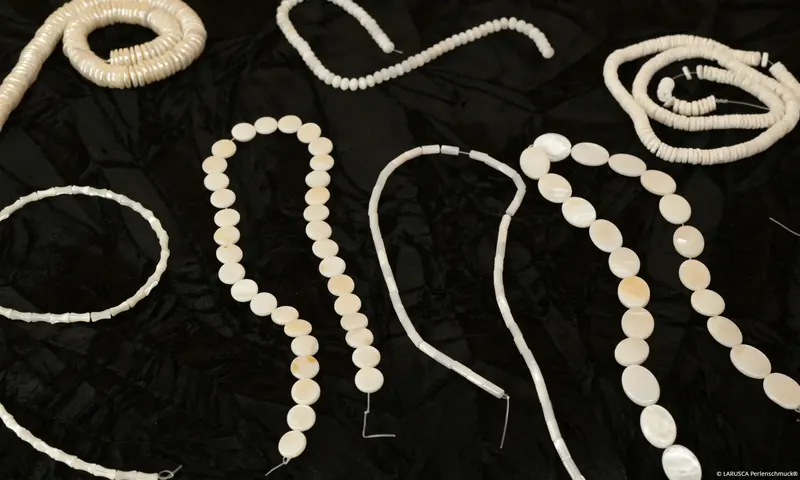
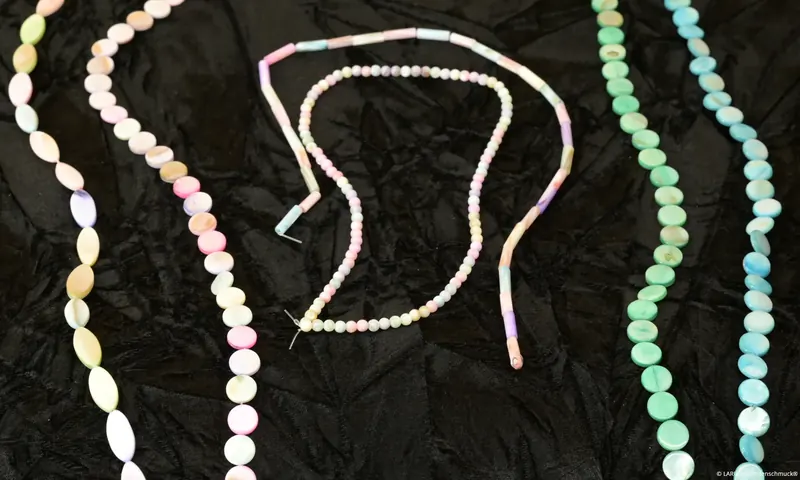
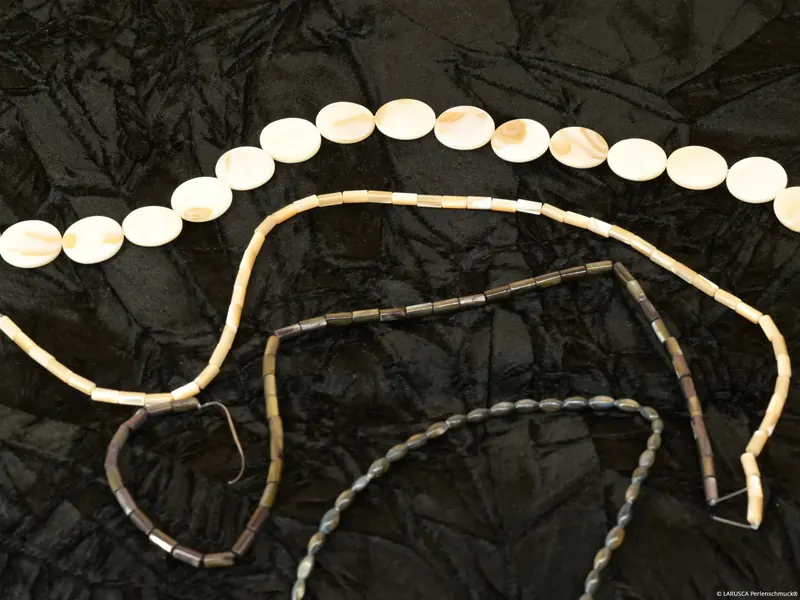
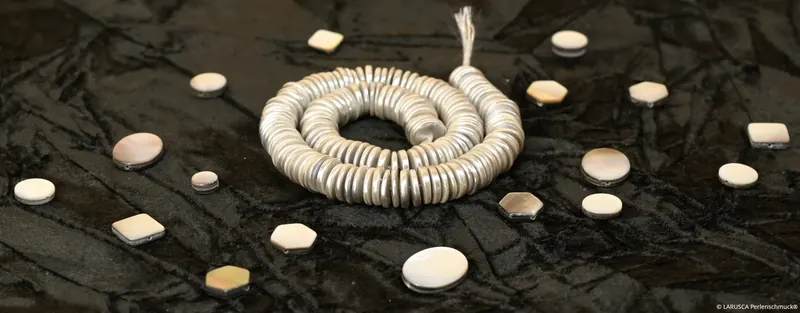
Shell creations are made from natural shell material. It is cut, polished, sometimes dyed and shaped into a wide variety of forms.
More recent developments include baroque-shaped shell creations finished with a high-quality coating. Similar to shell pearls, this treatment creates a particularly deep and intense lustre that beautifully highlights the natural structure of the shell.
The Peacock colour variation is especially striking. Its iridescent play of colour recalls the rich green, blue and violet tones of a peacock feather and gives every piece of jewellery an exceptional presence.
Shell creations are made from natural shell material and shaped into a wide variety of forms. High-quality finishes give them a particularly deep lustre and distinctive character.
Abalone
Colours that dance with the light.
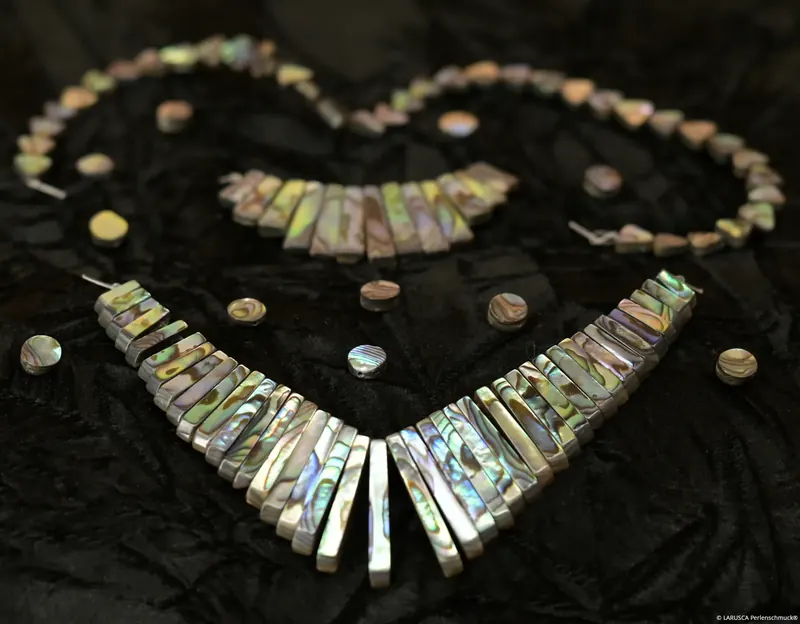
Abalone mother-of-pearl is obtained in thin layers from the shell and applied to a supporting material, then sealed and polished.
The resulting lustre captivates with an intense play of colour in shades of green, blue and gold. Depending on how the light falls, new nuances continually appear, bringing each piece of jewellery to life. Because of the complexity of the manufacturing process, abalone is considered a particularly high-quality material.
The resulting lustre captivates with an intense play of colour in shades of green, blue and gold. Depending on how the light falls, new nuances continually appear, bringing each piece of jewellery to life. Because of the complexity of the manufacturing process, abalone is considered a particularly high-quality material.
Abalone mother-of-pearl is obtained in thin layers from the shell and applied to a supporting material, then sealed and polished.
Abalone captivates with a fascinating play of colour in shades of green, blue and gold. Depending on the light, new nuances continually appear, bringing each piece of jewellery to life.
Abalone captivates with a fascinating play of colour in shades of green, blue and gold. Depending on the light, new nuances continually appear, bringing each piece of jewellery to life.
Freshwater Pearls
Every pearl is a small, unique creation of nature.
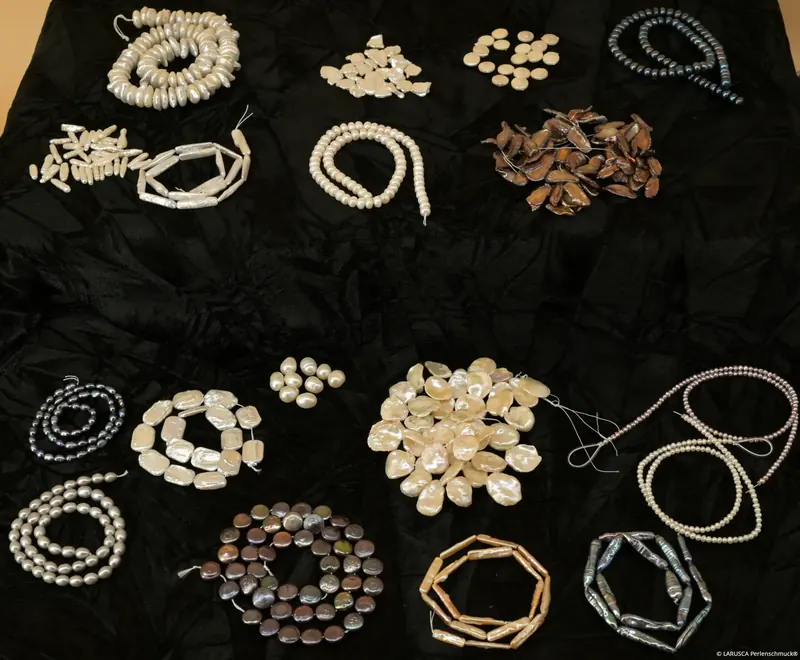
Freshwater pearls are cultivated in lakes and rivers. A small piece of mollusc tissue is inserted into the mollusc, which gradually surrounds it with layer upon layer of nacre – a process comparable to a natural protective response. Cultivation generally takes between one and five years.
Each pearl grows naturally and develops its own individual character. Unlike industrially manufactured materials, freshwater pearls are rarely perfectly round. Fine growth zones and growth ridges form during their development within the mollusc, giving each pearl its own distinctive appearance.
What may sometimes be perceived as an irregularity is actually a sign of their natural formation. It is precisely these subtle structures that give many pearl necklaces their particular charm and emphasise the uniqueness of every individual pearl.
Because freshwater molluscs are sensitive to water quality, responsibly managed pearl farms contribute to maintaining clean aquatic environments. Most freshwater pearls available today originate from China. A single mollusc can form numerous pearls at the same time, making this type of pearl particularly versatile and accessible. Some freshwater pearls are also dyed to enhance their appearance and create new, harmonious colour palettes.
Freshwater pearls grow in molluscs in lakes and rivers. Each pearl develops its own shape and distinctive appearance. Fine growth characteristics are a sign of their natural formation and make every pearl a small, unique creation.
Ming / Edison Pearls
Expressive pearls with a distinctive presence.
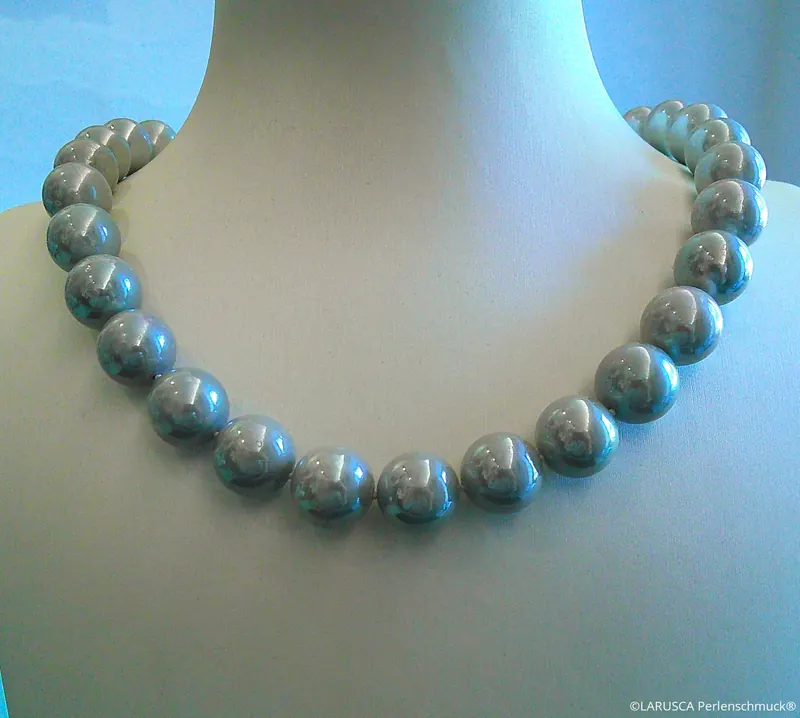
Ming pearls are particularly large freshwater pearls that can grow in the mollusc for up to five years. Their impressive size and natural beauty make them particularly suitable as pendants or as a defining element in a piece of jewellery.
More information
More information
Ming pearls are particularly large freshwater pearls with an impressive presence. They are often used as pendants or as the central element of a piece of jewellery.
More information
More information
Saltwater Akoya Pearls
The epitome of classic pearl elegance.
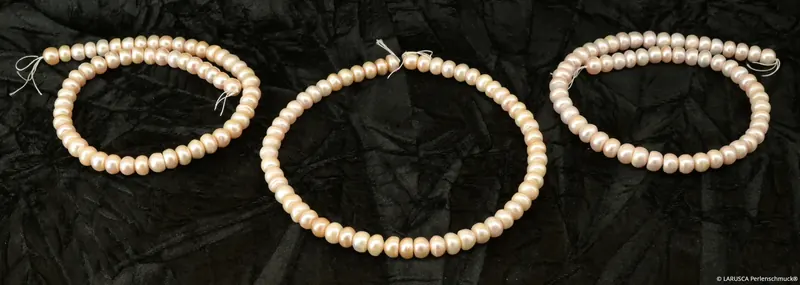
Akoya pearls are cultivated in the sea. A small piece of tissue and a shell nucleus are inserted into the mollusc, which is then kept in baskets in the sea.
Over a growth period of approximately 18 to 24 months, the pearls develop under natural conditions. After harvesting, they are carefully sorted and matched according to size, colour and shape.
As each mollusc generally produces only a few pearls, Akoya pearls are among the more valuable saltwater pearls. Their lustre is prized for its exceptional fineness and brilliance.
Akoya pearl cultivation is considered particularly demanding. As the molluscs are exposed to the natural conditions of the sea, storms, strong currents, severe weather and, in some regions, even tsunamis can damage pearl farms or destroy entire harvests. Such events cannot be predicted, making cultivation complex and risky. For this reason, Akoya pearls are cultivated in significantly smaller quantities than freshwater pearls – a factor that contributes to their higher value and price.
Akoya pearls are cultivated in the sea and are among the most valuable saltwater pearls. Their fine lustre and elegant appearance make them the epitome of classic pearl elegance.
Mallorca Pearls
Traditional craftsmanship from Spain.
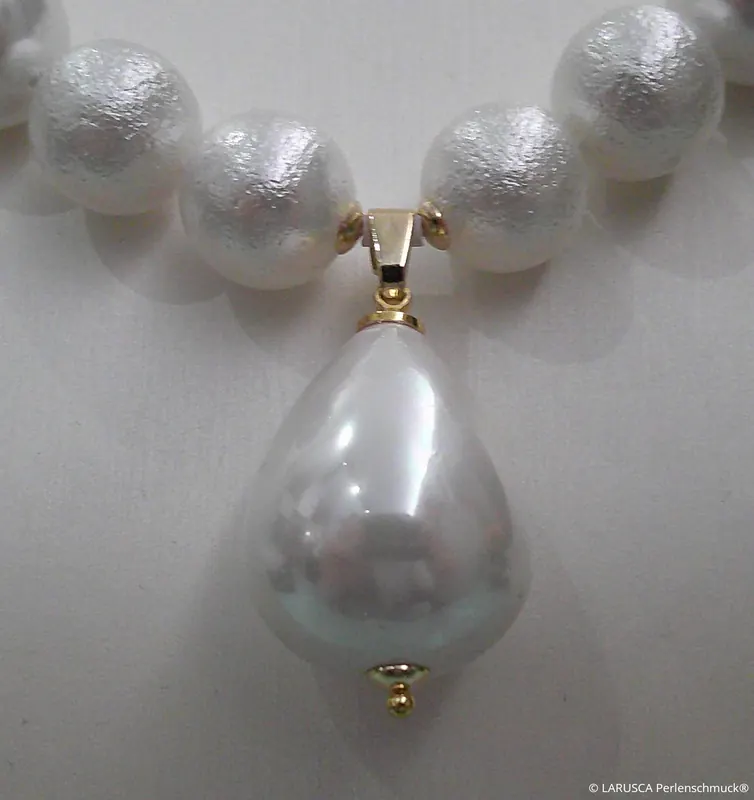
Mallorca pearls originate from the Spanish Mediterranean island of Mallorca, where a special manufacturing process was developed in the late 19th century. They continue to be valued for their even lustre and careful craftsmanship.
They are made using a precisely formed mineral or sand core. This is given a special pearl coating in numerous stages. Each individual layer is allowed to dry and harden before the next is applied. In this way, the characteristic surface with its soft play of light is gradually created.
This process allows Mallorca pearls to be produced in a wide range of colours and sizes. Their almost perfect shape and even surface have made them a popular choice for classic pearl jewellery for generations.
Mallorca pearls are produced entirely through an artisanal and technical manufacturing process and, unlike natural or cultured pearls, do not develop inside a mollusc. Their beauty comes from a carefully built-up surface and a manufacturing technique refined over many decades.
More information
Mallorca pearls are made on the Spanish Mediterranean island of Mallorca using a traditional process. A mineral or sand core is given a special pearl coating in numerous stages, creating their characteristic even lustre.
Available in many colours and sizes, they are distinguished by their almost perfect shape. Unlike natural or cultured pearls, Mallorca pearls are produced entirely through an artisanal and technical manufacturing process.
More information
Available in many colours and sizes, they are distinguished by their almost perfect shape. Unlike natural or cultured pearls, Mallorca pearls are produced entirely through an artisanal and technical manufacturing process.
More information
Tahitian Pearls
The mysterious beauty of the South Seas.
Tahitian pearls are cultivated in the lagoons of French Polynesia.
The molluscs that produce them are large and create pearls in dark shades – from silver and grey to almost black – with a characteristically intense lustre.
Because of the demanding cultivation process, Tahitian pearls are considered particularly exclusive.
LARUSCA Perlenschmuck® works with Tahitian pearls exclusively for bespoke commissions and according to individual customer wishes.
Tahitian pearls are cultivated in the lagoons of French Polynesia. Their dark colours and intense lustre make them some of the most exclusive pearls in the world.
LARUSCA Perlenschmuck® works with Tahitian pearls exclusively for bespoke commissions and according to individual customer wishes.
LARUSCA Perlenschmuck® works with Tahitian pearls exclusively for bespoke commissions and according to individual customer wishes.
Materials
Quality you can see and feel.
In addition to pearls, I use other carefully selected materials in my jewellery, chosen to support the beauty and durability of each piece.
Quality, skin compatibility and resistance are central to this selection.
Depending on the design, metal components are made from nickel-free surgical steel, rhodium-plated 925 silver or 18-carat gold-plated alloys.
The pearl threads are made from high-strength, sweat-resistant high-tech fibres, allowing for secure and durable construction.
Zirconia is also among the materials used. It is set into the metal settings of pendants, clasps or earring elements. These are precisely manufactured crystals made from zirconium dioxide, valued for their fine cut and high brilliance. Their fire is reminiscent of diamonds, while offering a modern and versatile alternative.
Unlike simple glass stones (rhinestones), zirconia is a high-quality, technically advanced material with high hardness and an elegant appearance.
In addition to pearls, I use carefully selected materials that combine quality, skin compatibility and durability.
These include nickel-free surgical steel, rhodium-plated 925 silver, 18-carat gold-plated alloys and high-strength high-tech fibres.
Zirconia is also among the materials used. Its high brilliance and elegant appearance make it a refined addition to many pieces of jewellery.
These include nickel-free surgical steel, rhodium-plated 925 silver, 18-carat gold-plated alloys and high-strength high-tech fibres.
Zirconia is also among the materials used. Its high brilliance and elegant appearance make it a refined addition to many pieces of jewellery.
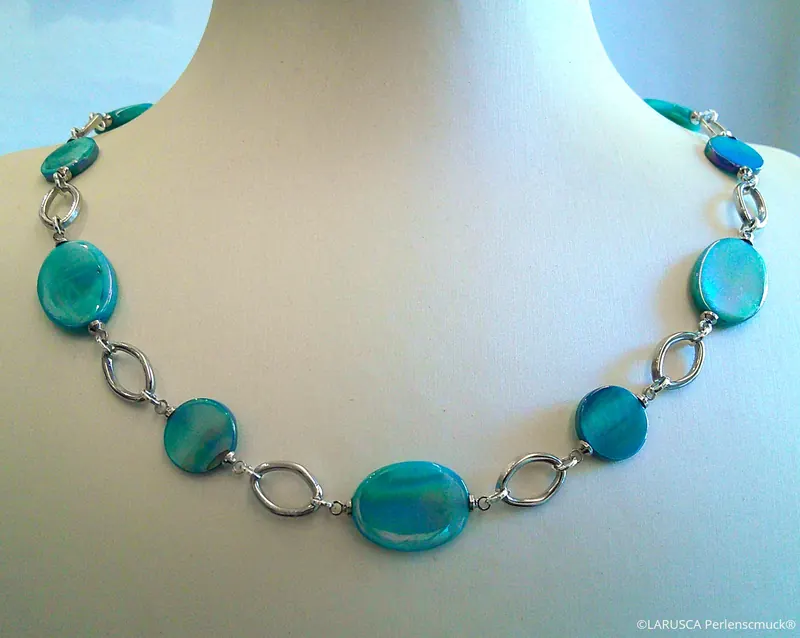
Aurora Borealis (AB Coating)
Colours that come alive with the light.
The AB coating (Aurora Borealis) is an extremely thin surface finish that creates a fascinating play of colour depending on how the light falls. From different viewing angles, subtle shades of blue, gold, green and violet shimmer across the surface without changing its underlying colour.
This special finish is now used on a range of jewellery materials, including high-quality shell creations.
Technology you can barely see – but notice immediately.
To achieve an even coating, the material surface must first be cleaned completely. Even the smallest traces of dust or grease would prevent the subsequent layer from bonding evenly.
The jewellery elements are then placed in a high-vacuum chamber. Special metal compounds are vaporised using intense heat. The resulting metal particles settle on the surface as an extremely thin layer – often only a few nanometres thick.
In a subsequent thermal process, this layer bonds permanently with the material. This creates a resistant and durable finish.
What makes this process special
The AB coating does not alter the material itself; it only affects how light is reflected from its surface. As a result, new colour nuances appear depending on the lighting and viewing angle.
It is precisely this lively interplay of light and colour that makes AB-coated jewellery elements a distinctive addition to selected LARUSCA collections.
The AB coating (Aurora Borealis) is an extremely thin surface finish that reflects light in subtle shades of blue, gold, green and violet.
In a high-vacuum chamber, a metal layer only a few nanometres thick is permanently bonded to the material surface. The base colour remains unchanged – only the way light is reflected is altered.
The result is an iridescent play of colour that changes with every viewing angle.
In a high-vacuum chamber, a metal layer only a few nanometres thick is permanently bonded to the material surface. The base colour remains unchanged – only the way light is reflected is altered.
The result is an iridescent play of colour that changes with every viewing angle.